

Alpine Cattle Drive
When nature shows off its colorful side and the leaves begin to change color, when the air grows clearer, temperatures drop, and the days slowly grow shorter, it’s time for the grazing animals to return home to the barn. Fall is also a time of traditions and customs. In this blog post, you’ll learn about the significance of alpine farming in general and the tradition behind the cattle drive in the Ennstal Valley. We had the opportunity to accompany this event at the Walcheralm in Ramsau am Dachstein:
Alpine Cattle Drive
The story behind this festive tradition
When nature shows off its colorful side and the leaves begin to change color, when the air grows clearer, temperatures drop, and the days slowly grow shorter, it’s time for the grazing animals to return home to the barn. Fall is also a time of traditions and customs. In this blog post, you’ll learn about the significance of alpine farming in general and the tradition behind the cattle drive in the Ennstal Valley. We had the opportunity to accompany this event at the Walcheralm in Ramsau am Dachstein:
The Origins and Significance of Alpine Pastoral Farming
Grazing on alpine meadows has always played a vital role in agriculture. What comes to mind when you hear the term “alpine farming”? Many people think of enjoyment and relaxation, watching cows graze, and going on exciting hikes. But alpine farming also plays an important role from an ecological perspective: For example, by carefully selecting locations, natural hazards such as avalanches or landslides can be minimized. Alpine pastures are also among the most species-rich habitats in the Alps. The production of butter, cheese, and milk is equally important for farms in the valley. Alpine herders manage the alpine pastures with great dedication and care and, in doing so, help shape Austria’s cultural landscape.
The Background of the Traditional Cattle Drive
One day before the animals are herded down into the valley, the tradition known as “Schottenrühren” takes place. During this process, the last of the alpine milk is heated in a copper kettle and then mixed with buttermilk and sour milk. The curdled “Schotten” is divided into small bowls and stirred until it is very smooth. In the region around Schladming, it is often flavored with raisins or cinnamon.
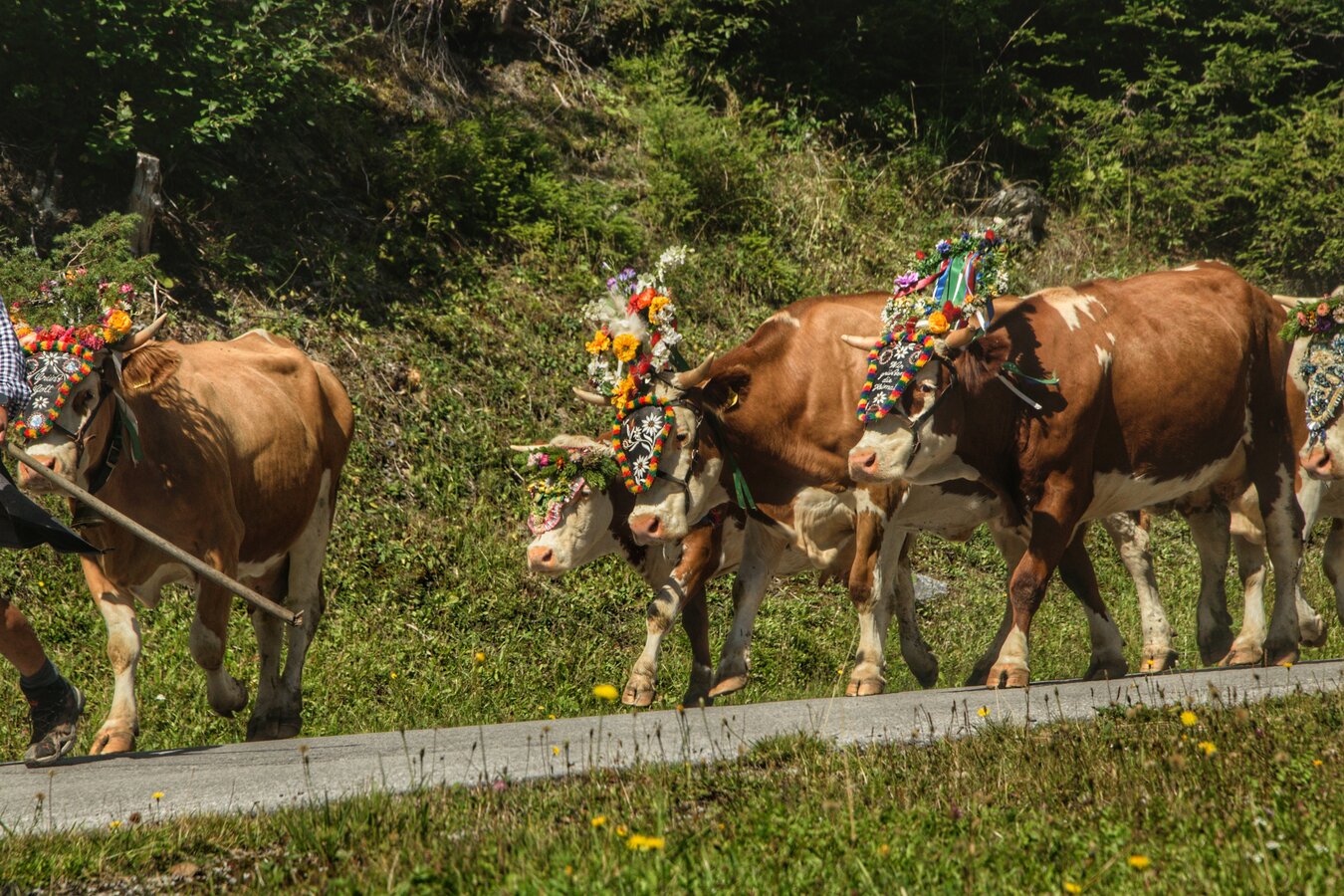
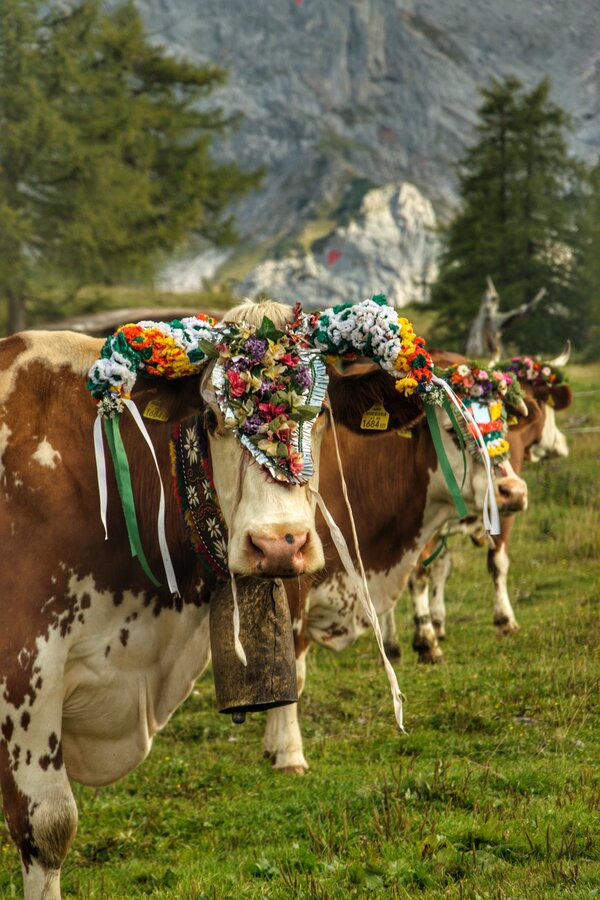
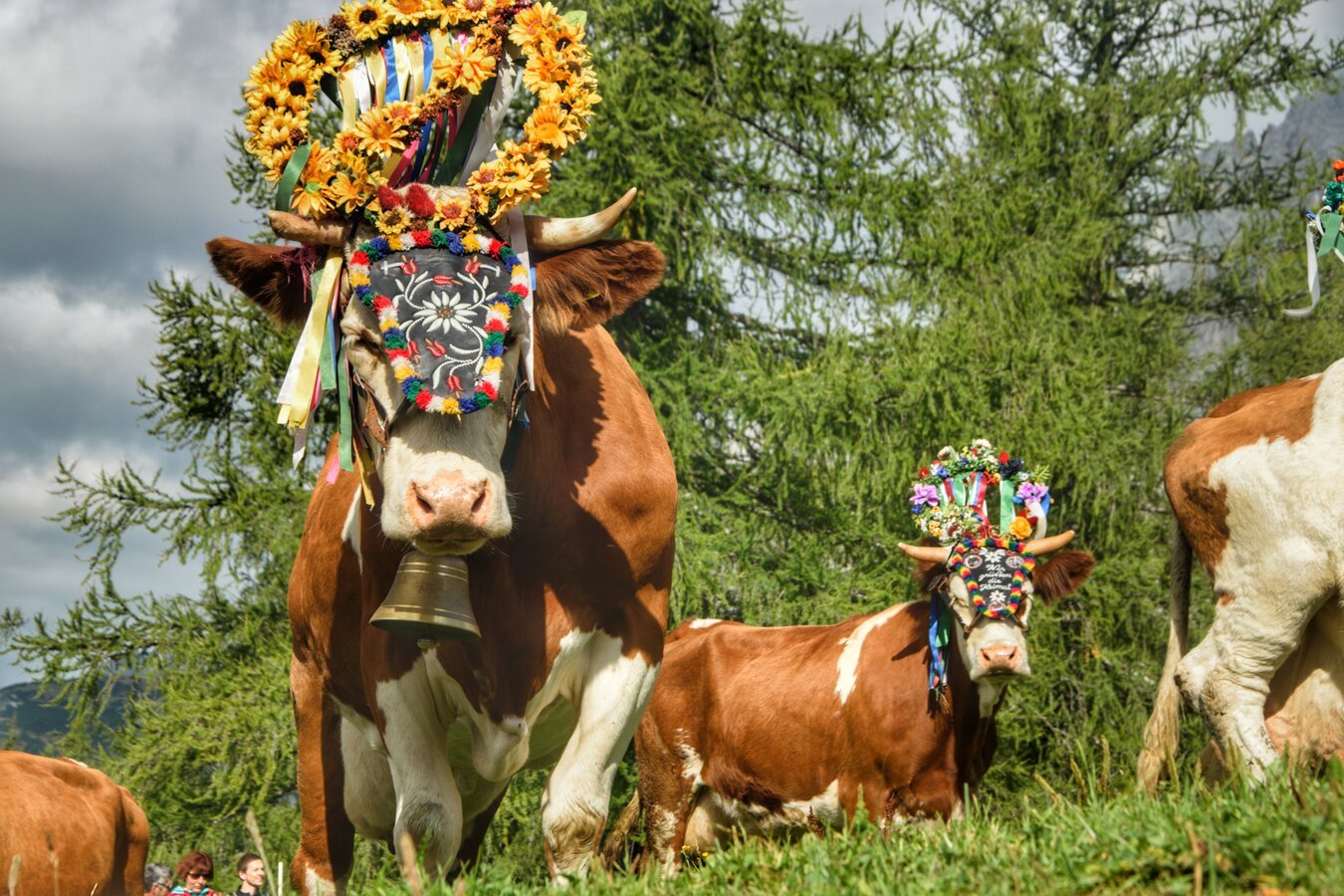
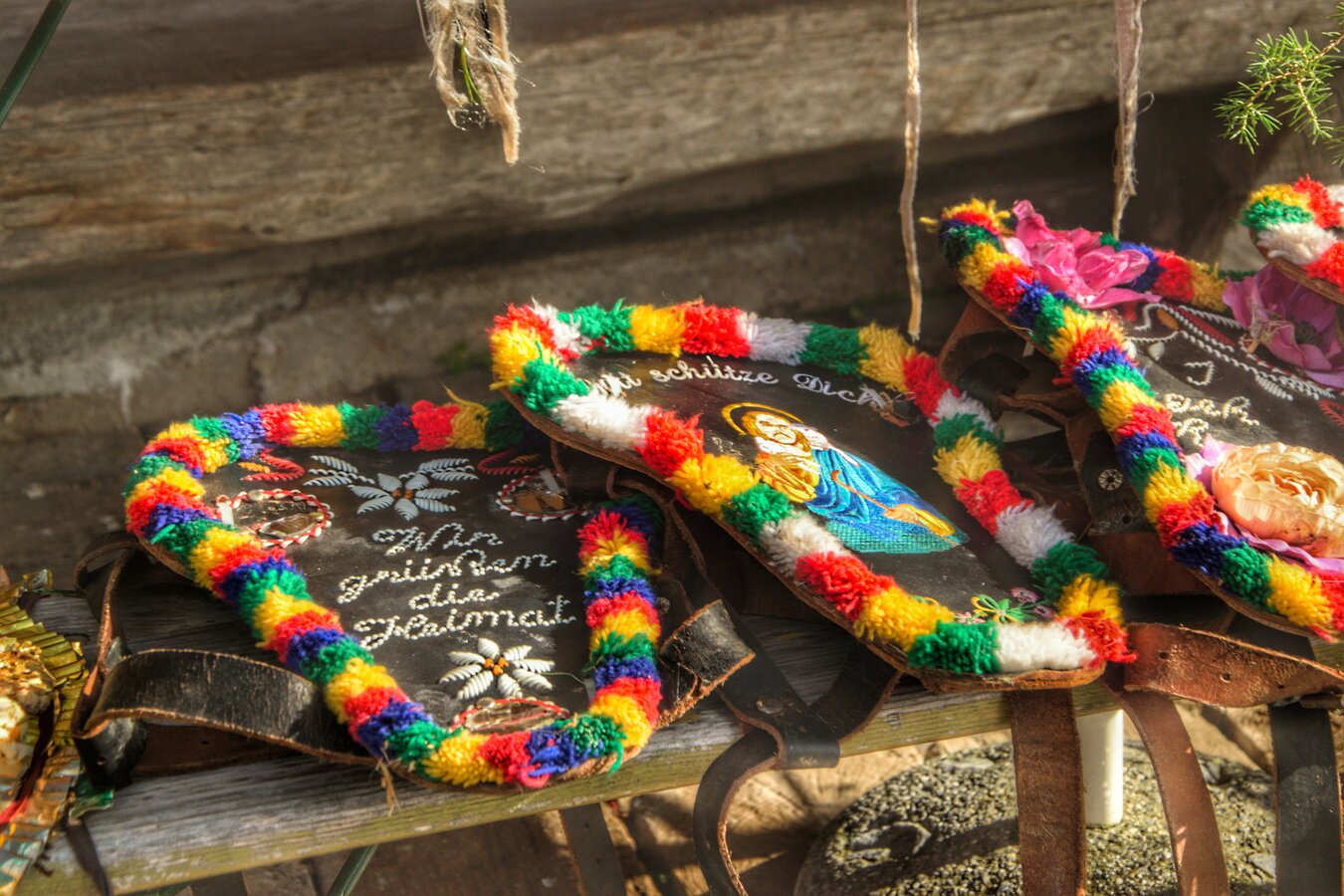
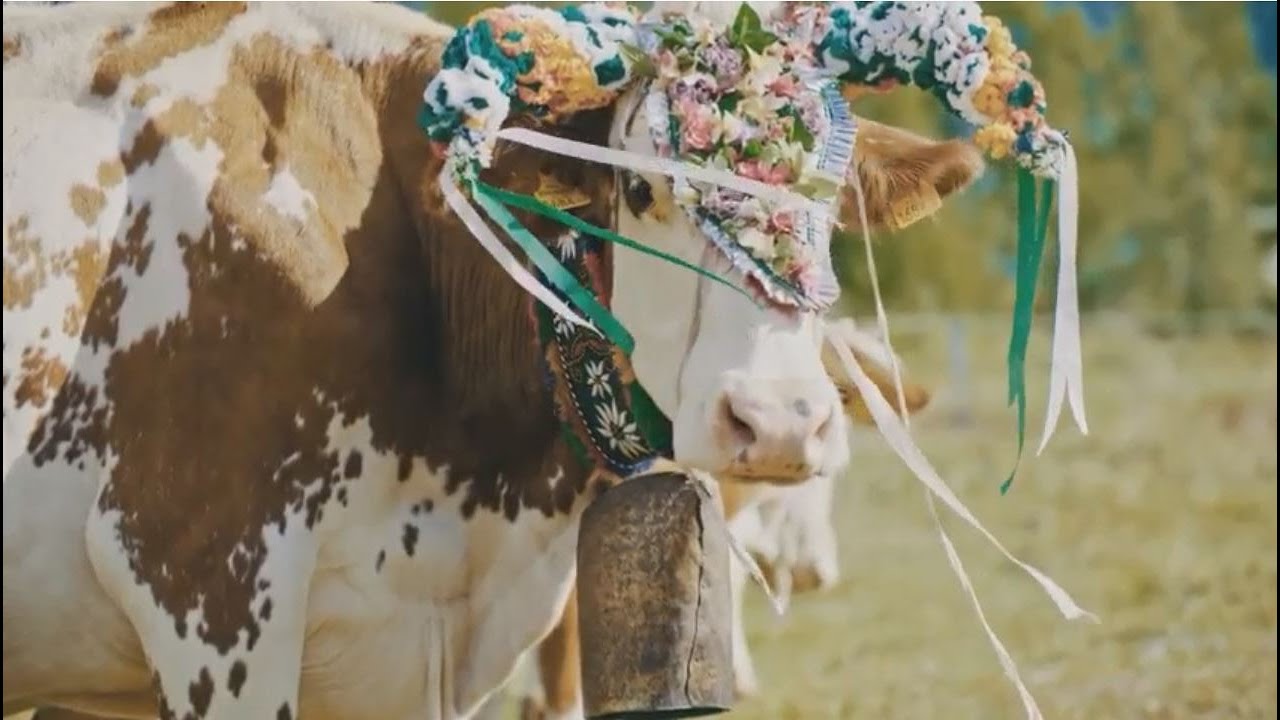
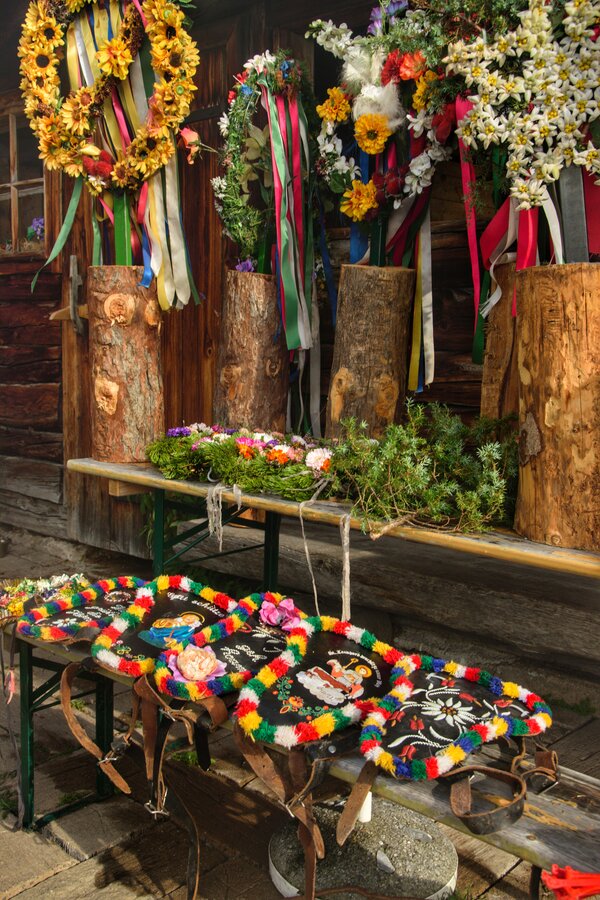
On the day of the Almabtrieb, the “Aufkranzen” begins early in the morning after milking, as is the case at the Walcheralm at the foot of the Dachstein. Provided the summer has passed without incident and all the animals return safely to the valley, the cows are adorned with colorful flower wreaths, ribbons, and signs—all lovingly crafted—to celebrate the occasion. However, as a sign of mourning, in the event of a loss or death, the colorful decorations are omitted and the adornments are kept in dark colors.
The bell cow leads the herd alongside the herder. She is adorned with a neck wreath, a head wreath, and the so-called “Hörnerschorn.” All other cows receive head wreaths. Bringing up the rear of the procession is the dairymaid, who treats spectators lining the route to local specialties. These traditionally include “Raungerl”—small shortbread dough balls fried in hot oil until golden brown and then rolled in cinnamon and sugar.
In gratitude for a successful summer, the annual farm festival has evolved at the Walcheralm from the tradition of the cattle drive, during which the cows are joyfully welcomed back to the valley. A tradition that will hopefully live on with future generations!