

Donnersbachwald - Oberwölrz: Stage 03 Hemma Pilgrimage Route Admont
Tour description
Saint Hemma, born in 980 as the Countess of Friesach-Zeltschach, was a well-known figure among the population, not least because of her charity and patronage. Among other things, she founded the Benedictine monasteries of Gurk and Admont, where the largest monastic library in the world can be seen today.
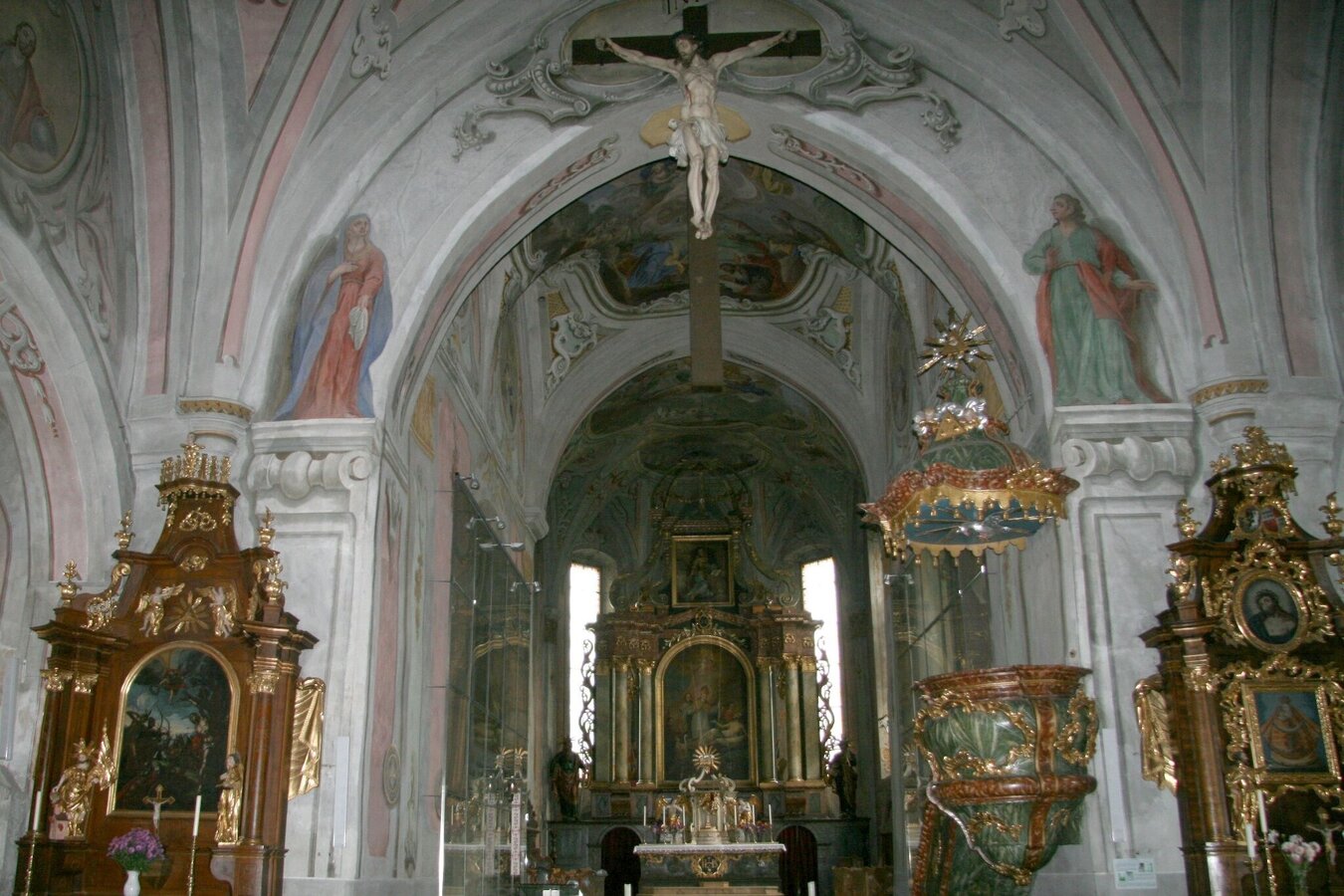
Oberwölz, our destination today, was elevated to the status of a town as early as 1300 and experienced an economic boom in the 14th and 15th centuries. The town wall, three town gates, and the fortifications date back to this period and still give the town center its medieval appearance. The parish church of St. Martin is considered the oldest church in Oberwölz. Not far from the parish church is the hospital church of Heiliger Sigismund. This purely Gothic church was built in 1430 by Hans Jersleben and has a distorted floor plan due to space constraints. The valuable interior furnishings include the magnificent high altar with a larger-than-life crucifix. In the center of the main square stands the Mariensäule, presumably donated in 1717, featuring the statue of Mary and the plague saints Rochus and Sebastian, all of which are carved from wood. In the northern part of the main square, near the Schöttltor, you will find the Austrian Brass Music Museum and a local history museum.
The tour
Map, elevation profile & further information
From Donnersbachwald, we follow the main road for about 4.5 km into the valley to the holiday village of Hinterwald (1,066 m). Before the Lahrerbrücke, at the EGG Donnersbachwald power station, path no. 936 begins (red-white-red markings), which leads to the Glattjochkapelle and then down to Oberwölz. This "ancient path" over the Glattjoch was once used by muleteers. We stay on the marked path, which leads along the Donnersbach, initially on a forest road to the Riedleralm and then to the Beireutalm. The path then turns left and continues through the forest and across the Glattjochalmen, partly steep, up to the Glattjoch (1,988 m), which we reach after about 4.5 hours (12.5 km).
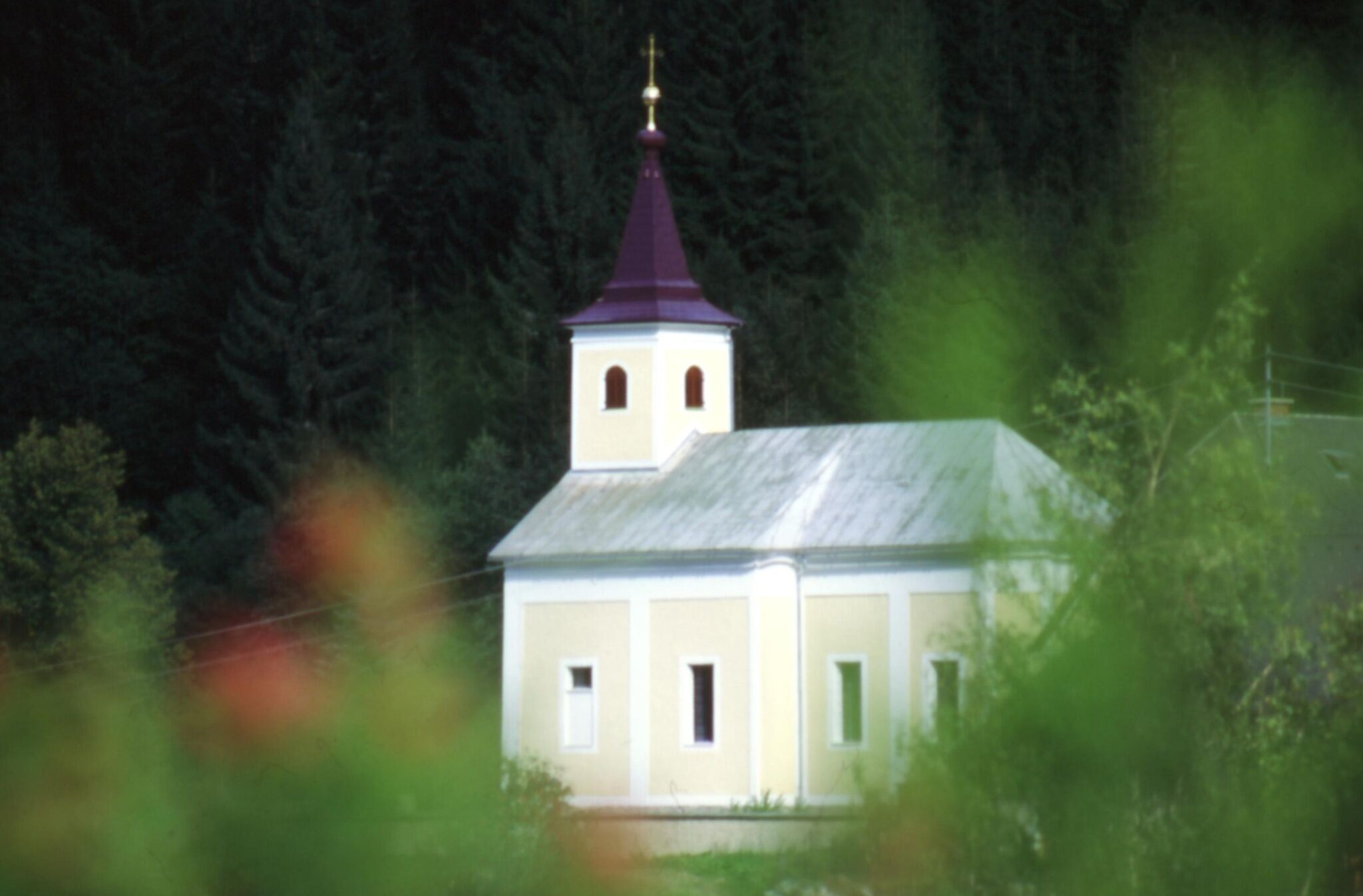
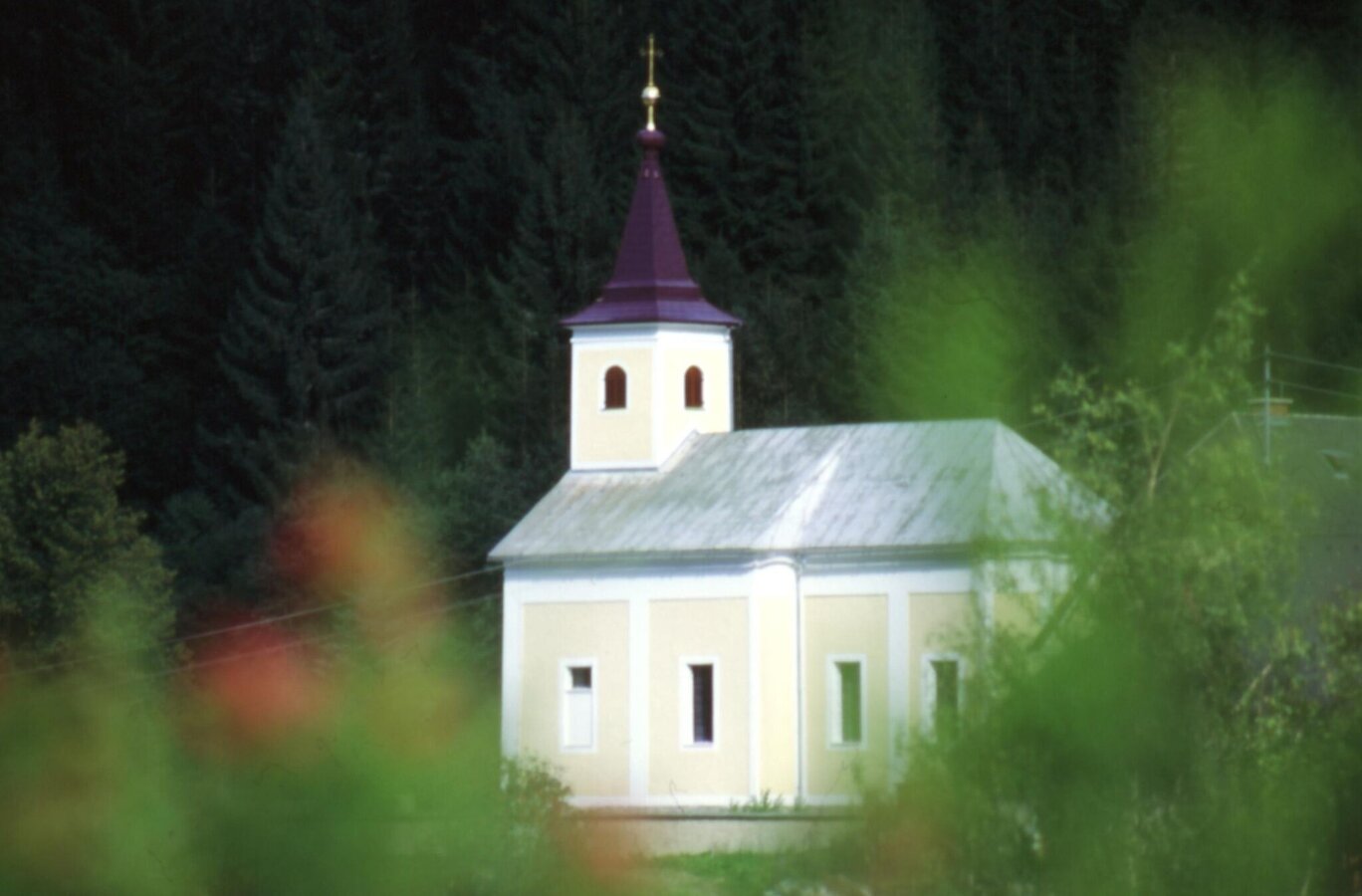
Here at the highest point of the pilgrimage route (1,988 m), a wide panoramic view of the magnificent mountain world opens up to us. The Glattjochkapelle is the highest sacred building in Styria (1,988 m) and was built in honor of Saint Virgil. The dry-stone masonry, unique in Central Europe, indicates an age of over 1,000 years. The chapel has been scientifically investigated and fully restored in recent years. Meanwhile, a mountain mass is held at the chapel every year in June.
The hiking trail then leads from the Glattjoch initially steeply downhill into the Weberbachtalboden. On this narrow mountain path, however, our sure-footedness is required. The alpine pastures here are mostly damp. Shortly before Kote (1,650 m), we have to cross the Weberbach - stepping on a few stones in the stream. And soon we come into a wooded area and to a forest road. We follow it, always descending into the valley, to the Schöttlkapelle (1,216 m). From the chapel, the road leads us further until we finally arrive in Oberwölz after 16.5 km and another four and a half hours of walking. Coming from the north through the Schöttltor, we reach this smallest town in Styria with its predominantly medieval town center. The total walking time from Donnersbachwald to Oberwölz is nine hours.
Detailed information on how to get there can be found here.
A parking lot is available in the village center at the pavilion as well as at the valley station of the Riesneralm ski area.
ÖBB www.oebb.at or Verbundlinie Steiermark www.busbahnbim.at
With the BusBahnBim App from Verbundlinie, timetable information is easier than ever: all connections by bus, train, and tram in Austria can be queried by entering locations and/or addresses, stops, or important points of interest. The app is available as a free app for smartphones (Android, iOS) – on Google Play and in the App Store
Mountain rescue emergency number: 140
Tip for emergency reporting – provide answers to the six W-questions: What happened? How many injured? Where did the accident happen (possibly GPS coordinates)? Who is reporting (callback number)? When did the accident happen? Weather at the accident site?
Packing your backpack correctly makes everything easier: pack heavy items first. The water bottle should always be within easy reach in a side pocket. All things that are needed frequently, such as sunglasses, camera or hiking map, belong on top. Emergency equipment including blister plasters belongs in every backpack and dressing according to the "onion system" is always recommended!
Steiermark Tourism, Tel. +43 316 40030, www.steiermark.com
TV Schladming-Dachstein, Tel. +43 3687 23310, www.schladming-dachstein.at
TV Region Murau, Tel. +43 3532 2720, www.regionmurau.at
Monika Gschwandner-Elkins: Hemma Pilgerwege, ARGE Hemma Pilgerweg, 9313 St. Georgen am Längsee, Freytag&Berndt und Artaria KG, 2008